
The Magic of Elements: A Complete Breakdown of Pragmatic Play’s Mechanics
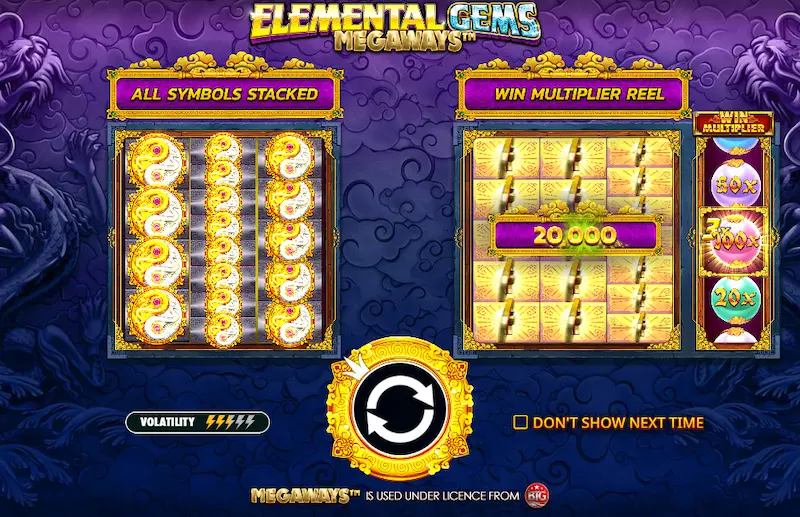
Dive into a detailed analysis of the Elemental Gems slot’s mathematical model. We break down how the unique fourth reel works, complete with multipliers reaching up to ×100,000, and assess actual volatility along with bonus feature trigger frequency. This guide will help you understand the game’s algorithm, payout structure, and the hidden mechanics that determine the outcome of every gaming session. Optimize your approach using in-depth data and expert observations.
Volatility
High
Multiplier
Up to ×100,000
RTP
96.5%
Gameplay
Dynamic

A solid Elemental Gems strategy isn’t about beating the random number generator — no legitimate approach to a licensed slot can do that. It’s about managing bankroll, bet size, and session pacing in a way that accounts for the game’s high volatility and its variable Megaways structure, where the number of ways to win — and therefore the character of any given spin — changes constantly. This guide walks through every practical component of a well-structured Elemental Gems strategy, from bankroll allocation to session tracking, with the reasoning behind each recommendation.
Understanding Megaways Variance Before Building an Elemental Gems Strategy
Before any bankroll or betting plan makes sense, it helps to understand what actually drives variance in this specific game. Because each of the six reels can independently display between two and seven rows on any given spin, the total number of ways to win recalculates constantly, meaning two consecutive spins at the same bet size can carry meaningfully different payout structures. An Elemental Gems strategy has to account for this variability directly, since it means win frequency itself fluctuates spin to spin in a way that fixed-reel titles don’t experience.
Why Tumble Chains Deserve More Weight Than Initial Wins
Because the tumbling mechanic allows a single spin to cascade through several consecutive wins, an Elemental Gems strategy should treat tumble chain length — and how many elemental multiplier symbols appear within it — as the primary driver of significant payouts, rather than fixating on the size of the first win in a sequence.

1xBet
🎁 Up to +500% bonus on first deposit
🎰 +250 free spins
📈 High odds on sports
💸 Fast payouts and cashback

MelBet Casino
🎁 Welcome package up to ₽150,000
🎰 Up to +290 FS on top slots
💸 Cashback and bonuses on repeat deposits
⚡️ Fast games, crash and live casino

1xSlots
🎁 100% up to €150 on deposit
🎰 Up to 100 FS on slots
💸 Up to 10% cashback
🔥 VIP tier + tournaments

MostBet Casino
🎁 Up to +100%–250% bonus
🎰 Up to 250 FS
💰 Deposit bonus
💸 Up to 10% cashback
Bankroll Management Principles for Elemental Gems Strategy
Bankroll management is the foundation of any Elemental Gems strategy, since the game’s high volatility means winning stretches and dry stretches can both run longer than expected. A widely used guideline is to risk no more than 5% of a total bankroll in any single session, which allows enough spins to reach a meaningful sample size without exposing the full budget to one unlucky run.
The Difference Between a Plan and a Rule
A lot of what gets called “strategy” in casual conversation is really just a loose preference — a vague sense of “I’ll stop if I’m losing too much” without any specific number attached. The distinction matters more than it might seem: a plan describes an intention, while a rule specifies an exact trigger and an exact action. “I’ll be careful with my bankroll” is a plan. “I stop the session the moment I’ve lost $25” is a rule.
Rules are far more resistant to erosion under pressure than plans are, because they don’t require an in-the-moment judgment call about whether things have gotten “bad enough” to stop. That judgment call is exactly where discipline tends to break down, since a player mid-session is rarely in the best position to evaluate their own situation objectively. Converting loose plans into specific, numeric rules before a session starts removes that vulnerable decision point entirely.

Bankroll Allocation by Budget Size
The table below illustrates how this 5% guideline translates across different overall bankroll sizes, along with the approximate number of spins that allocation typically supports at a proportionally scaled bet.
| Total Bankroll | Recommended Session Budget (5%) | Approximate Spin Count |
|---|---|---|
| $50 | $2.50 | 100–150 spins |
| $100 | $5.00 | 100–150 spins |
| $250 | $12.50 | 100–150 spins |
| $500 | $25.00 | 100–150 spins |
A larger bankroll under this approach doesn’t translate into more spins — it translates into a proportionally higher bet size while keeping session structure the same, which keeps the relationship between bankroll and session risk consistent regardless of budget.
Building an Elemental Gems Strategy Around Realistic Expectations
One of the quieter reasons strategies fail isn’t poor math — it’s mismatched expectations. A player who unconsciously expects a big multiplier chain every few sessions, based on a highlight reel of memorable wins rather than the actual statistical rarity of those outcomes, will tend to feel disappointed by ordinary sessions and may start deviating from the plan in response. An Elemental Gems strategy holds up better when expectations are calibrated to what a typical session actually looks like, not to the best sessions anyone has ever described.
This means accepting, going in, that most sessions will end close to break-even or with a modest loss, and that the standout sessions are — by definition — the exception rather than the rule. Internalizing that distinction before a session starts makes it far easier to stick to a plan when a given session turns out to be ordinary rather than extraordinary.
Bet Sizing: A Step-by-Step Approach
Choosing a bet size is one of the more consequential decisions in any Elemental Gems strategy, since it directly determines how meaningful an extended tumble chain with multiple elemental multipliers would actually be in real terms. The following sequence outlines a practical way to settle on a starting bet:
- Calculate the session budget as roughly 5% of the total bankroll set aside for play.
- Divide that session budget by a target spin count of at least 100, to establish a baseline maximum bet per spin.
- Start the session at or slightly below that baseline bet to leave room for adjustment.
- If tumble chains begin running longer than usual or elemental multipliers start appearing with noticeable frequency, consider increasing the bet incrementally rather than all at once.
- If the session produces a long stretch of short, single-tumble spins, resist the urge to increase bet size in an attempt to force a longer chain.
This structure keeps bet sizing tied to a defined process rather than an emotional reaction to recent spins, which is one of the more common ways sound planning breaks down mid-session, especially once a promising tumble chain starts building.

Elemental Multiplier Timing Tactics
The elemental multiplier symbols are the single biggest swing factor in this game’s payout potential, and while their appearance is fully random, there are still tactical considerations worth building into an Elemental Gems strategy around how to respond as a tumble sequence develops:
- Avoid changing bet size mid-tumble — multipliers apply to whatever bet was active when the spin started, so adjustments only take effect on the next spin.
- Treat a single elemental multiplier appearance as a neutral signal rather than a reason to immediately increase bet size, since one occurrence doesn’t predict whether another will follow in the same chain.
- Pay attention to how many elemental symbols land within the same tumbling sequence, since their multiplier values stack rather than replace one another.
- Remember that a series of moderate wins chained together across several tumbles can outperform a single large win with no multiplier involvement at all.
None of these tactics change the underlying odds, but they help ensure that when a multiplier-heavy tumble sequence does occur, the bet size in play is one that makes the resulting win meaningful rather than incidental.
Session Planning and Time Limits
Because the Elemental Gems slot can produce long stretches without a significant win, session length needs to be planned with the same discipline as bankroll. Sessions capped between 30 and 40 minutes are generally recommended, giving enough time to evaluate the game’s tumble behavior without extending exposure during an extended dry period.
Recommended Session Length by Bet Level
| Bet Level | Recommended Session Length | Session Character |
|---|---|---|
| Low | 45–60 minutes | Extended, steady pacing |
| Medium | 30–40 minutes | Balanced risk and duration |
| High | 15–20 minutes | Short, high variance |
Using an external timer — a phone alarm or a browser extension — removes the guesswork of tracking elapsed time manually, which matters more than it sounds during a fast-paced tumbling session where minutes can pass unnoticed.
Stop-Loss and Take-Profit Rules
A stop-loss is a predefined point at which a session ends regardless of how the player feels in the moment, and a take-profit is the equivalent threshold on the winning side. Both are essential components of a disciplined Elemental Gems strategy, particularly because a long tumble chain with several stacking multipliers can create a false sense of momentum that leads to overplaying a session that should have already ended.
Setting Practical Stop-Loss and Take-Profit Levels
- Decide on a stop-loss amount before the session starts — commonly 100% of the session budget, meaning the session ends if that full amount is lost.
- Set a take-profit target, often between 2x and 3x the session budget, as the point at which the session ends regardless of how the game “feels.”
- Write both numbers down or set them as explicit reminders, since verbal intentions are easy to abandon mid-session.
- Once either threshold is hit, close the session — treat this as a non-negotiable rule rather than a suggestion.
- After a large multiplier-driven win, consider setting aside a portion of it before continuing, so a subsequent losing stretch doesn’t erase the entire result.
These thresholds don’t need to be complicated to be effective — the value comes from deciding them in advance, before the emotional pull of a rapidly extending tumble chain can influence the decision.
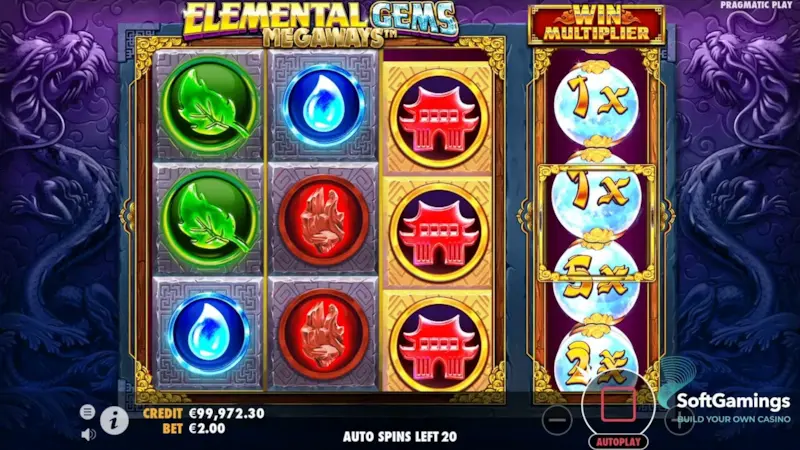
Free Spins Strategy Considerations
The free spins round is where the Elemental Gems slot’s multiplier accumulation reaches its highest potential, since elemental multiplier values collected during this mode persist and stack across the entire round rather than resetting after each spin. A few tactical points are worth keeping in mind specifically for this feature:
- Confirm the bet size before the free spins round triggers, since it cannot be changed once the feature has started.
- Understand that early multipliers in a free spins round carry forward, meaning a strong start compounds meaningfully by the round’s end.
- If a feature buy option is available, treat it as a separate, clearly budgeted expense rather than drawing from the same funds allocated to base game spins.
- Avoid judging a single free spins round’s outcome as representative — variance within this feature is naturally high even across a large sample of triggers.
Why Writing Things Down Outperforms Remembering Them
There’s a meaningful difference between deciding on a stop-loss figure mentally and actually writing it somewhere visible before a session starts. Numbers held only in memory are subject to quiet revision under pressure — a $25 stop-loss can drift into a $30 stop-loss without the player fully registering the change, especially once a session is already emotionally invested.
A number written on paper, in a notes app, or set as a literal on-screen reminder doesn’t have that same flexibility. It sits there as a fixed reference point that either has or hasn’t been reached, which removes the ambiguity that memory alone tends to introduce. This is a small, almost trivial-sounding habit, but it’s one of the more consistently cited differences between players who report their limits actually holding and those who find their limits quietly expanding session after session.
Volatility-Adjusted Bankroll Planning
Because the Elemental Gems slot sits in the high volatility category, bankroll planning benefits from being adjusted relative to lower-volatility alternatives a player might be more used to. The table below compares recommended bankroll depth across volatility tiers, measured in number of minimum-bet spins a session should be able to sustain.
| Volatility Tier | Recommended Spin Depth | Bankroll Implication |
|---|---|---|
| Low volatility | 50–75 spins | Smaller reserve needed |
| Medium volatility | 75–100 spins | Moderate reserve needed |
| High volatility (Elemental Gems) | 100–150 spins | Larger reserve recommended |
This deeper spin depth requirement is one of the more overlooked aspects of an Elemental Gems strategy — players coming from lower-volatility, fixed-reel titles often underestimate how much bankroll depth this game’s variance actually calls for.
Feature Buy vs Natural Trigger: A Comparison
Some operators offer a feature buy option that lets a player pay a set fee to enter the free spins round directly, bypassing the need to land scatter symbols naturally. Deciding whether this fits into a given Elemental Gems strategy depends on session goals and bankroll depth.
| Approach | Cost Structure | Best Suited For |
|---|---|---|
| Natural trigger | Spread across base game spins | Longer sessions, steady bankroll use |
| Feature buy | Fixed upfront cost per entry | Shorter sessions, larger dedicated budget |
Feature buy access doesn’t change the underlying odds within the round itself, but it does concentrate risk into fewer, larger decisions rather than spreading it across many smaller ones — a distinction worth weighing carefully before including it as a regular part of a session plan.
An Elemental Gems Strategy Doesn’t Need to Be Complicated to Work
There’s a tendency to assume that a “real” strategy needs to involve intricate betting progressions, complex triggers, or elaborate spreadsheets tracking dozens of variables. In practice, the components that actually make a measurable difference — a fixed session budget, a bet size tied to that budget, and a stop-loss and take-profit pair — are simple enough to write on an index card.
Complexity for its own sake tends to work against consistency rather than for it, since an elaborate system with many moving parts is harder to follow correctly under the time pressure of an active session. A simple set of rules that gets followed every single time will outperform a sophisticated system that only gets followed half the time because it’s too cumbersome to track in the moment.
Why an Elemental Gems Strategy Should Start Before the First Deposit
Most players open a session budget and bet size in their head only after already loading the game, which means the first few spins often happen without any real plan in place. A more disciplined Elemental Gems strategy treats the planning phase as something that happens before the platform is even opened — deciding total bankroll, session budget, and stop-loss figures on paper or in a notes app first, then loading the game only once those numbers are already fixed.
This separation matters because the visual excitement of the game itself — the tumbling animations, the elemental color flashes, the anticipation of a multiplier chain — makes it a poor environment for calm financial planning. Numbers decided in a quiet moment beforehand tend to hold up far better under the influence of an active session than numbers improvised on the fly once the reels are already spinning.
Autoplay Precautions
Autoplay can be a convenient feature, but it removes the manual pacing that naturally slows down decision-making between spins. Within a disciplined Elemental Gems strategy, autoplay should be used cautiously:
- Set a stop-on-loss-limit and stop-on-win-limit before activating autoplay, since most platforms support these parameters directly.
- Avoid using autoplay during the first sessions with this game, since it’s easier to misjudge pacing before understanding the tumble and multiplier rhythm firsthand.
- Periodically check in on an autoplay session rather than letting it run fully unattended, particularly during longer tumble sequences.
- Treat autoplay as a pacing tool, not a way to disengage from the session’s predefined stop-loss and take-profit rules.
Keeping a Session Log
Tracking outcomes over time turns an Elemental Gems strategy from a set of one-off decisions into a system that can actually be refined. A simple log doesn’t need to be complicated — the table below outlines the core fields worth recording after each session.
| Field | Purpose |
|---|---|
| Session date | Tracks frequency and spacing of play |
| Starting budget | Baseline for calculating session result |
| Bet size used | Correlates outcomes with bet level over time |
| Longest tumble chain observed | Helps gauge how the multiplier system is behaving over time |
| Result (win/loss amount) | Core data point for long-term evaluation |
Over several sessions, this kind of record reveals patterns that are difficult to notice in the moment — which bet sizes and session lengths tend to produce more stable outcomes, and whether stop-loss or take-profit limits are actually being respected in practice.

What Changes After a Losing Session, and What Shouldn’t
A losing session naturally invites some self-examination, but it’s worth being precise about what that examination should actually target. Reviewing whether the pre-set stop-loss was respected, whether the bet size stayed within the planned range, and whether the session length matched the original plan are all reasonable things to check after a loss.
What shouldn’t change is the underlying math itself — a losing session doesn’t mean the bet size was “too small” and needs to be raised, nor does it mean the game is somehow different than it was in the previous session. The random number generator has no memory of the last session, so nothing about how it will behave going forward is informed by what just happened. The review process should look for process failures — a rule that wasn’t followed — rather than searching for a mathematical adjustment that isn’t actually warranted by a single outcome.
Elemental Gems Slot: Complete Game Guide
The Megaways reel system, tumbling wins, elemental multipliers, RTP, and volatility explained in full.
Read the Full Guide →Six Common Mistakes That Undermine an Elemental Gems Strategy
Even a well-planned approach can break down in execution. The following mistakes come up repeatedly among players applying strategy to high-volatility Megaways titles with tumbling multiplier systems:
- Increasing bet size after a losing stretch in an attempt to recover losses faster, rather than sticking to the pre-planned bet level.
- Assuming the Megaways ways-to-win count directly predicts win frequency, when in fact a higher ways count doesn’t guarantee more frequent wins on any given spin.
- Treating a single free spins round’s outcome as a meaningful sample rather than one data point among many.
- Skipping the demo mode entirely and learning the tumble and multiplier rhythm using real-money spins instead.
- Using autoplay without setting stop-on-loss or stop-on-win parameters beforehand.
- Continuing to play immediately after hitting the take-profit threshold, effectively erasing the discipline the limit was meant to enforce.
Most of these mistakes share a common thread — they involve abandoning a pre-set rule in response to in-the-moment emotion, which is precisely the scenario stop-loss, take-profit, and session limits are designed to prevent.
Elemental Gems Strategy: Frequently Asked Questions
No. Reel height for the upcoming spin is determined only after the bet is placed, so there’s no way to observe it in advance and adjust accordingly. Bet size decisions should be made before each spin based on the session plan, not in reaction to how the previous spin’s reels happened to configure.
Not for strategic purposes. All four elemental symbols function identically in terms of multiplier generation, so no element carries better odds than another. Tracking this might be interesting out of curiosity, but it shouldn’t factor into bankroll or bet-sizing decisions.
There’s no fixed number, but most players find the discipline becomes easier to maintain after roughly ten to fifteen sessions of consistently writing the limits down beforehand. The habit of pre-commitment tends to strengthen with repetition rather than clicking into place immediately.
Not automatically. Chain length increases the opportunity for elemental multipliers to appear and stack, but a long chain with no multipliers involved can still pay less than a short chain that happens to include a couple of high-value multiplier hits. Length raises the odds of a big outcome without guaranteeing one.
Splitting a total budget across multiple smaller sessions generally supports more consistent decision-making than committing it all to a single sitting. Each shorter session gets a fresh stop-loss and take-profit reset, which limits how much a single bad stretch can affect the overall bankroll.
Start by checking whether stop-loss and take-profit limits were actually followed in each logged session, since abandoning those rules mid-session is the most common source of inconsistent outcomes. If limits were respected consistently, the next thing to review is whether bet size stayed proportional to bankroll across sessions.
Psychological Discipline During High-Volatility Sessions
Long stretches without a meaningful win are a normal, expected part of playing a high-volatility Megaways title, not a sign that something is wrong with the game or that a strong tumble chain is somehow “overdue.” Recognizing early signs of tilt — impulsively raising bets, chasing losses, or repeatedly telling yourself “just one more spin” — is one of the more valuable skills an Elemental Gems strategy can build over time. The moment any of these patterns appear, the most effective response is usually a short break rather than continued play.
Framing the game as entertainment rather than a source of guaranteed income also plays a meaningful role in maintaining discipline. This mindset doesn’t change the math behind the RNG or the constantly shifting Megaways ways-to-win count, but it does change how a player responds emotionally to both winning and losing stretches, which in practice has a much larger effect on session outcomes than any specific betting tactic.




Elemental Gems Strategy: Summary
A sound Elemental Gems strategy rests on a handful of interconnected habits: allocating bankroll in proportion to the game’s high volatility, choosing a bet size deliberately rather than reactively, setting stop-loss and take-profit limits before a session begins, and tracking results over time to refine future decisions. None of these habits guarantee a winning outcome, since the underlying result of every spin remains governed by an independently certified random number generator. What they do provide is a structured, repeatable framework that keeps sessions controlled and intentional, even during the extended dry stretches that come with playing a high-volatility Megaways title.
Players who haven’t yet reviewed how the underlying mechanics work — including the variable reel structure, tumbling win system, and elemental multiplier mechanic this strategy is built around — can find a full technical breakdown in the main Elemental Gems slot guide.